
On this page
- Something Changed, and Every Rank Tracker Felt It
- How Google Is Poisoning Rank Tracker Data
- Why This Is Worse Than the Usual Google Dance
- The Most Accurate Rank Tracker Is the One Google Gives You
- Impressions Are the First Honest Signal
- Track Traffic, Not Just Rankings
- Clicks Aren't Calls Either
- Stop Refreshing. Start Reading.
If your rankings have looked like nonsense for the last couple of months, it isn't you and it isn't your site.
Google has started serving fake results to the tools that scrape its search pages, which is every rank tracker there is, including ours.
So a keyword can show number one on Monday, nowhere on Tuesday and number three on Wednesday while nothing about your site has changed.
That's why checking one ranking every morning has stopped telling you anything useful.
And I'll show you what Google is doing, and where the real numbers now live, in this post.
Something Changed, and Every Rank Tracker Felt It
For six to eight weeks before I understood what was happening, my rank tracker numbers simply stopped adding up.
A site would show number one, then not even in the top ten, then number three, then gone again, and it wasn't the usual Google dance I've watched for years.
It was consistently, confusingly wrong, and I wasn't the only one seeing it.
It turned out to be hitting every tracker and every data provider in the industry, not just ours, and it was eventually confirmed as something Google is doing on purpose.
So what is Google actually doing?
How Google Is Poisoning Rank Tracker Data
A rank tracker works in a simple way: it runs the search the way you would, from some IP address somewhere, and reports back what it sees.
Google has always tried to spot those automated searches, and in the past it would block them with a captcha or an error page, which the tracker would notice and simply try again.
What changed in September is that Google started serving those searches complete, normal-looking results pages with the real results swapped out, so the tracker faithfully records rubbish as if it were a genuine ranking.
A study by the rank-tracking company Nozzle, which analysed more than 42 million results pages, found that poisoned results began on 20 September and peaked on 2 November, when more than two thirds of the pages Google served to trackers were poisoned.
On a poisoned page, only around 30% of the sites that usually rank are still there, and the gaps are filled with social platforms, forums and directories.
Google has also started replacing the real result links with redirect links, blocking the proxy networks trackers rely on, and throwing up far more captchas than before, all at the same time.
The why is a war with scrapers, and most of the industry's view is that Google is aiming at AI bots and data resellers rather than the tools SEOs use, with rank trackers caught in the crossfire.
The result is the same either way: rank tracking is currently unstable, and it doesn't matter which tracker you're on.
Why This Is Worse Than the Usual Google Dance
Rankings were never perfectly stable, so it's worth separating the old noise from the new.
The old noise is the dance every new site goes through, an early pop followed by weeks of bouncing around before things settle, if they settle at all.
On top of that, Google has long shown different people different results depending on where they are and what they've searched before.
The poisoning sits on top of both, and it hits local searches hardest, because Nozzle found that 'near me' searches and home-service keywords were poisoned at nearly twice the rate of everything else.
That's exactly the kind of search a local lead site lives on, so if your tracker shows your site vanishing from the top ten for a few days, there's a good chance the site never moved at all.
None of this means the dance has gone away, and some new sites still never settle, but the tracked number has become a far less trustworthy witness to any of it.
Here's where the real numbers live.
The Most Accurate Rank Tracker Is the One Google Gives You
There's one source of ranking data that doesn't come from scraping, and that's Google's own report on what it showed people.
Search Console records every search your site appeared in, with the number of times it was shown, the clicks it got, the exact queries people typed and your average position for each one.
It's the horse's mouth, and it's as close to the truth as anyone outside Google can get.
It takes a little reading, because the position it shows is an average across every searcher and every variation of a query, so filter by country, by keyword and by date, and watch the trend over two to four weeks rather than any single day.
I'll be honest that even Search Console has wobbled this autumn, and some SEOs have questioned its data too, so no single number anywhere deserves blind trust right now.
But a report built from what Google actually served is a different class of evidence from a page Google served to a robot on purpose.
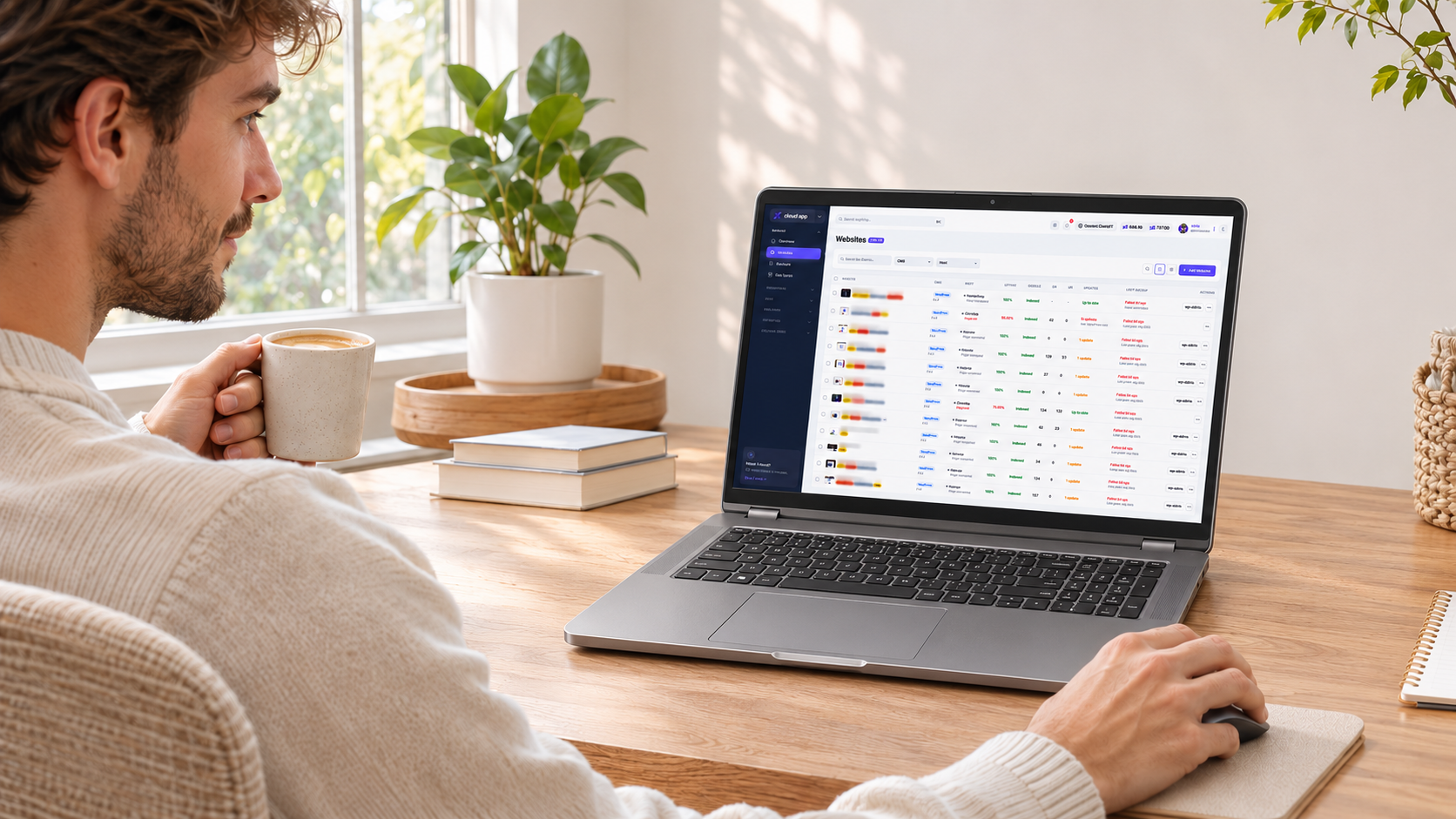
That's why Xagio now puts less weight on tracked rankings and more on Search Console, and shows the two side by side, with the X-rank from our tracker next to the G-rank from Search Console for the same keyword, so you can see at a glance whether they agree.
Connect Search Console in Xagio and that comparison updates every day.
Impressions Are the First Honest Signal
Before a new site ranks anywhere useful or gets a single click, Google starts showing it, and those impressions are the earliest sign that a site has been noticed.
An impression simply means your site was in the results someone saw, or was cited in an AI Overview or AI Mode answer.
It's visibility rather than success, but in a new site's first weeks a rising impression count tells you far more than a poisoned rank number bouncing between one and nowhere.
After impressions come clicks, then visitors, then calls, and each step in that chain is harder to fake than the one before it.
Track Traffic, Not Just Rankings
If the ranking number can't be trusted, what actually reached your site can.
Your own visitor data is the most stable report you have right now, because it counts real people arriving rather than what a robot was shown.
Xagio collects that automatically for hosted sites, so you can see the visits coming to the site and where they came from, next to what Search Console says Google sent.
When those two agree and your tracker disagrees, you know which one to believe.
The same view shows whether AI assistants are crawling and citing your site, which is its own subject.
Clicks Aren't Calls Either
The whole chain only pays when a visitor picks up the phone, so measurement has to run all the way to the call.
Impressions become clicks, clicks become visitors and visitors become calls, with each step filtering out some of the last.
A site with fewer impressions and more calls is the better site, which is one more reason rankings alone can mislead, and why knowing which site earned each call matters more than any position.
Stop Refreshing. Start Reading.
The number your rank tracker shows is poisoned for now, and every tool is in the same boat.
So stop refreshing it every morning and start reading the sources Google can't scramble as easily.
Watch impressions first, then the trend on the keywords that matter with the filters on, then the clicks and visitors, then the calls.
Judge a site over weeks rather than mornings, and build several so that one noisy graph never decides anything on its own.
Rankings still matter, but what reaches your site and rings your phone is the ground truth.
So when did you last open Search Console instead of your rank tracker?
Connect Search Console in Xagio and see the real numbers next to the tracked ones