
On this page
A site that's been ringing for months is doing more than sending you leads.
It's become an asset, and there are people who will pay real money for it.
Most site owners never think about that, so they either keep running sites they've lost interest in or let them quietly fade away.
The difference between a site that sells and one that doesn't comes down to one thing: whether a buyer can see proof of what it earns.
And I'll show you how to turn your site into that kind of proof in this post.
Why a Ranked Site Is an Asset, Not Just an Income
When a local site starts ringing, the obvious value is the rent or the lead payments it brings in each month.
What's easy to miss is that a site with months of history behind it has a second value, because someone else can buy it and take over that income.
That changes how you look at your portfolio, since you can use the evidence from each site to keep and grow the ones that work, and improve, drop or sell the rest.
Selling isn't just for your winners, either.
A site you've lost interest in, or one in a market you're moving away from, can still be exactly the opportunity someone else is looking for.
And a site that's producing steady revenue may well be worth keeping, so selling is a choice about what you want from your portfolio rather than a rule to follow.
So what is a buyer actually paying for?
What Buyers Will Pay For (and What They Won't)
A buyer is taking a risk on your word, so the price they'll pay depends on how little they have to take on trust.
Start with what they won't pay for, because it's where most sellers go wrong.
A lead count you typed into a listing is worthless to a buyer, since there's no way to tell whether it's real.
A screenshot of a ranking is almost as weak, because it shows one keyword on one day and could have been taken months ago or edited in a minute.
A revenue figure with nothing behind it, or a claim that a renter is paying a certain amount, gets the same shrug for the same reason.
Even a genuinely good site with that kind of evidence will attract low offers or none, not because it's a bad site but because the buyer can't tell the difference.
What buyers will pay for is history they can check for themselves.
That means months of real call and form records, the keywords the site genuinely ranks for, traffic drawn from Google's own data, and a clear statement of exactly what comes with the sale.
That last part matters more than people expect, since a buyer wants to know whether the domain, the hosting, the phone number and any current renter are included before they'll put a value on it.
It's also why tracking every call from the day a site goes live pays off twice, because the same records that prove the site to a renter are what prove it to a buyer later.
How the Marketplace Turns Your Data Into Proof
Proving a site's history by hand means emailing spreadsheets and screenshots to strangers, and none of it can be checked.
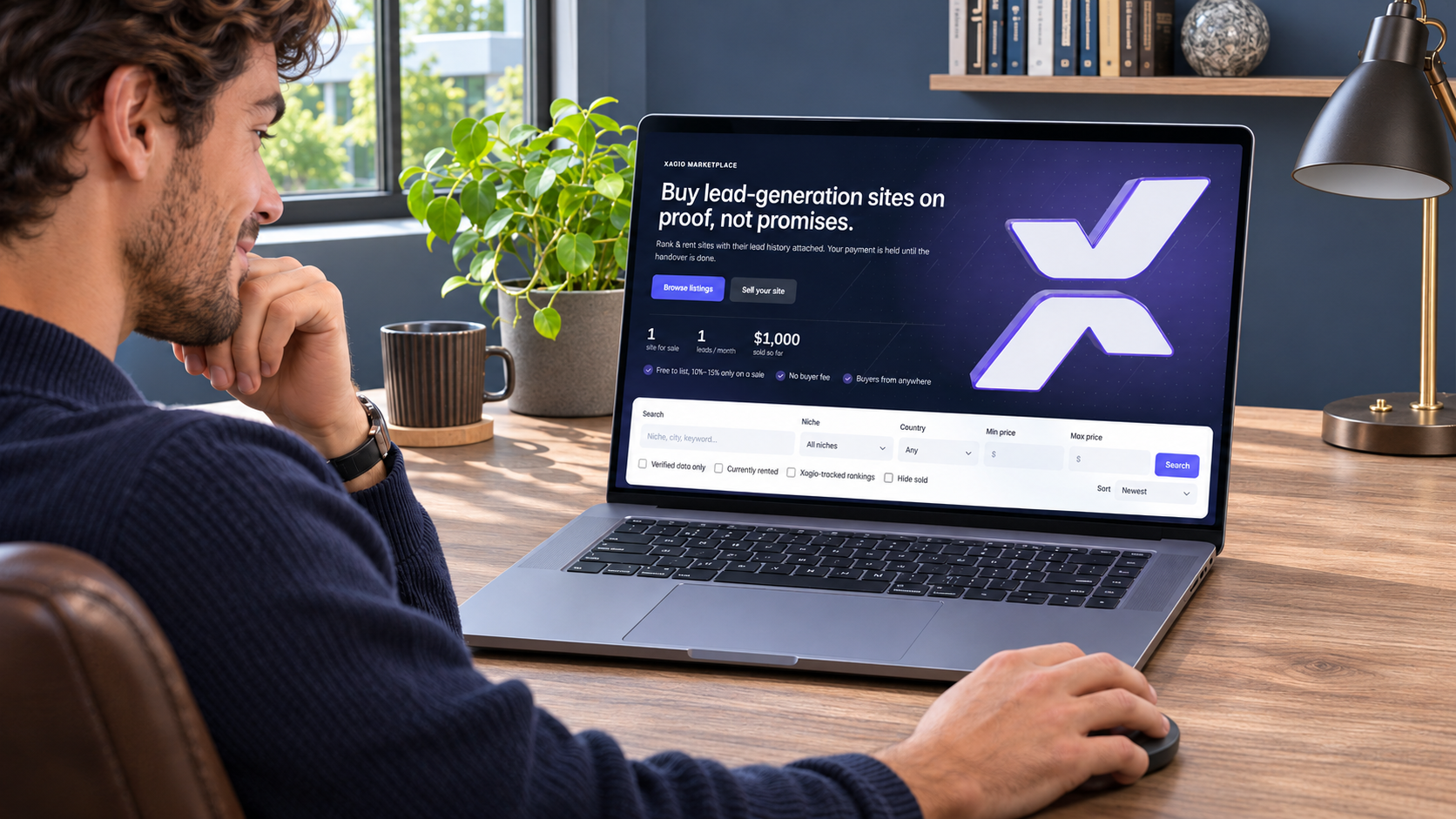
The Xagio Marketplace is built to replace that with evidence the buyer can verify.
When you list a site from your Xagio account, the listing is pre-filled with the site, its screenshot and the keywords it ranks for, so you're not starting from a blank form.
The proof then comes from your tools rather than your keyboard, because lead data flows in from your call tracking and form tools, traffic comes from a read-only connection to Google, and rankings come from Rank Tracker and refresh every night.
A listing with at least three months of lead data sent in by those tools earns a verified badge, which tells buyers at a glance that the numbers weren't typed in.
Buyers can also request due diligence access, which reveals the domain and lets them download the evidence, so the proof speaks for you before you've had a single conversation.
Every listing is reviewed before it goes live, which keeps the standard high for everyone selling there.
What Listing a Site Actually Costs
People assume selling a site means paying fees up front or handing over a slice of everything, and neither is true here.
Listing is free, buyers pay nothing extra on top of the price, and you pay a success fee only when the site actually sells.
That fee is 15% on sales under $25,000 and 10% from $25,000 upwards, with a $75 minimum, plus the card processing on the payment itself.
Your payout arrives in US dollars through Stripe, so there's nothing to invoice or chase.
Here's the part that protects both sides.
The Handover Is Part of the Sale
The moment of payment is where private site sales go wrong, because the buyer worries about paying for something they haven't received and the seller worries about handing over before they've been paid.
The Marketplace removes that standoff by holding the buyer's payment until the handover is complete.
You work through a checklist of what's included, such as transferring the domain, moving the hosting or the site, handing over the tracking number if it's part of the deal and passing on anything else you agreed.
The buyer confirms each item as they receive it, and once everything is confirmed, the money is released to you.
If the site is on Xagio Hosting or was built in Studio, the Xagio team can move it straight to the buyer's Xagio account, so nothing has to be rebuilt.
You have a week to complete the handover, and the funds release when the buyer confirms, or shortly after the checklist is complete if nothing is disputed.
For sites priced above $10,000, the sale is arranged with the Xagio team rather than through the standard checkout.
When to Sell and When to Keep
The decision to sell isn't about whether a site is good, it's about what you want from your portfolio.
Selling makes sense when you've stopped working that market, when you'd rather have the cash now to build the next batch of sites, or when the site doesn't fit how you prefer to earn.
Keeping makes sense when the site is producing steady calls, when it's renting well, or when you can see how to grow it further.
Either way, the method is the same one that got the site ranking in the first place, because you build several, measure them, keep the earners, and sell or drop the rest.
What changes is that selling turns a site you've finished with into money for the next one.
Turn Your Best Work Into Your Next Investment
Every site you build and rank is worth two things: what it earns each month, and what someone would pay to take it over.
Most people only ever collect the first.
Collecting the second comes down to one habit, because the proof a buyer wants is built one tracked call at a time, from the day the site goes live.
Track the calls, let the data do the talking, list the site where buyers can check it for themselves, and let the handover protect you both.
Do that once, and selling a site becomes a normal part of running a portfolio, where a finished site funds the next one.
So which of your sites would you sell first?