
Call source attribution is the difference between guessing and knowing.
It tells you exactly what brought a lead in, not just that a phone rang.
Without it, every “winning” page is a guess, every ad tweak is a gamble, and every CRO change is based on gut feel.
With it, you can follow a lead back to the source that created it, the path the visitor took, and the moment they decided to call or submit a form.
That’s when optimization becomes obvious, reporting becomes effortless, and scaling becomes predictable.
What you’ll learn here is a breakdown of what call source attribution really is, what it reveals, and how to capture it without stitching together three different tools or spending a fortune on more subscriptions.
What Is Call Source Attribution And Why Is It So Important?
Call source attribution is the ability to connect every phone call to the marketing source and on-site journey that produced it.
Instead of seeing “a call happened,” you see whether it came from Google search, paid ads, social media, or a referral link.
You also see what the visitor did before they called, including the landing page, the pages they viewed, how long they stayed, and the path they took through the site.
That matters because the page that ranks isn’t always the page that converts, and the traffic source that “looks best” isn’t always the one generating leads.
Call source attribution is important because it replaces opinions with proof.
It tells you what to scale, what to fix, and what to stop doing, without waiting weeks to “feel” whether a change helped.
It also protects you from the most common lead gen trap: assuming more traffic will solve everything.
If your best calls are coming from a handful of pages or one specific campaign, attribution shows you where the real leverage is so you can replicate it across the site.
What Call Source Attribution Tells You
Call source attribution doesn’t just tell you that a lead happened; it also tells you why and how it happened.
Being able to see the “why” and “how” puts you in a powerful position to optimize pages in priority order and with the ideal changes.
Attribution gives you three layers of clarity that drive almost every smart decision in lead gen.
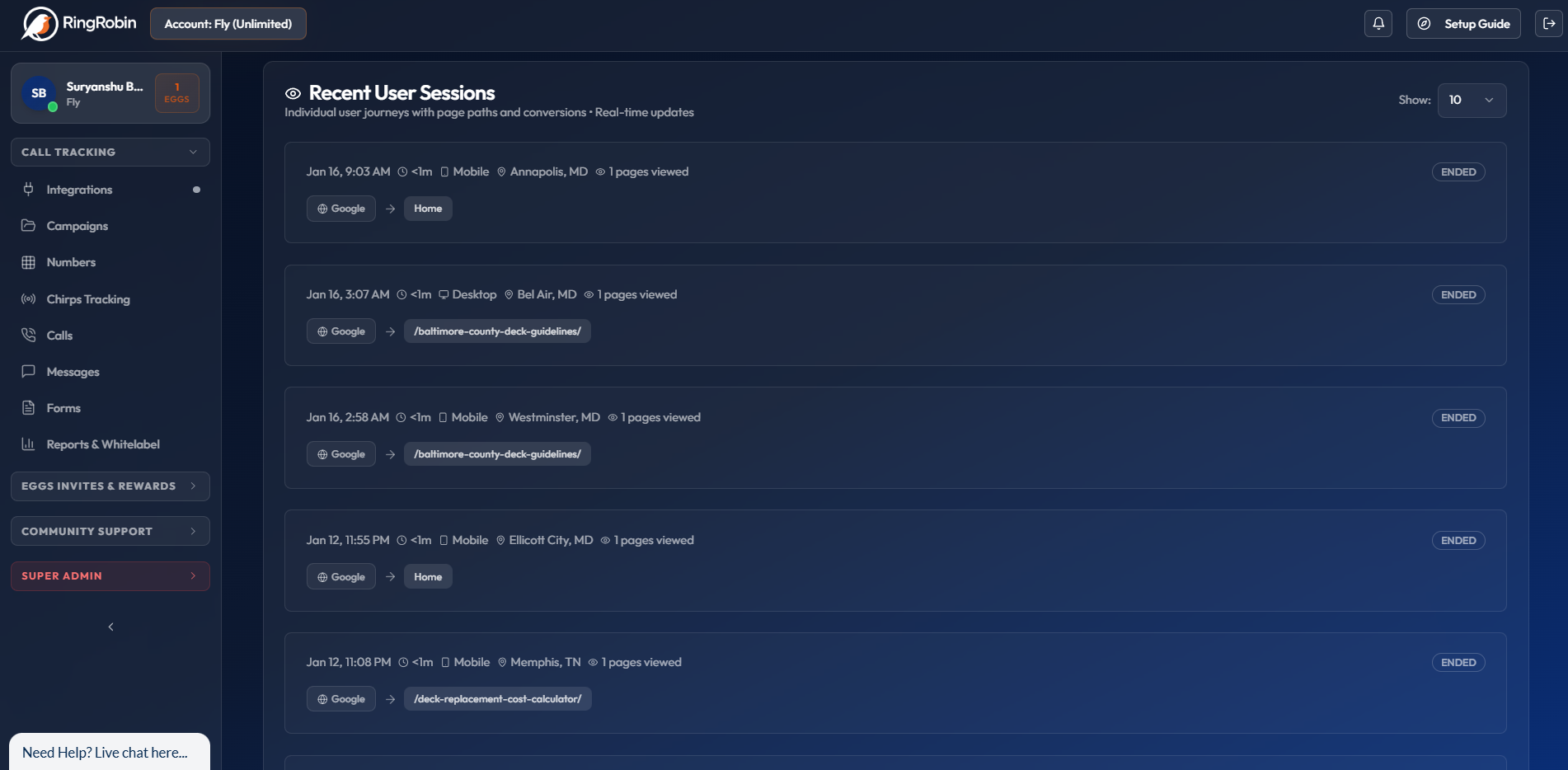
1) Where The Lead Came From
Call source attribution starts by answering the simplest question with total certainty: what actually brought the lead in.
Organic search, paid ads, social media, and referral traffic don’t behave the same, and they don’t convert the same.
Once the source is clear, budget decisions stop being emotional, because the winners and losers show themselves.
That’s also when the “surprise” pages appear, where a quiet long-tail keyword or niche service page is doing more work than the one you assumed was the hero.
2) What The Visitor Did Before Calling
Next comes the part most call tracking platforms miss, which is the journey before the call.
The first page a visitor lands on is rarely the one that convinces them to pick up the phone or submit a form.
Seeing the pages they visited and the path they took reveals what actually built intent.
That makes it easy to identify the real closers on the site, then replicate their layout, proof elements, and CTA placement across other pages.
The result is a site fully optimized for what actually works.
3) What Triggered The Call
Finally, attribution shows the moment the visitor decided to call.
Sometimes it’s a click-to-call button, sometimes it’s the header number, sometimes it’s a sticky bar, and sometimes it’s a contact section buried lower on the page.
Once that trigger is visible, the fastest CRO wins become obvious, especially on mobile devices. That’s where the click-to-call buttons and links really pay off, giving you the opportunity to replicate those that work best.
Whether it’s color, size, call-to-action statement, or the page alignment, you’re no longer guessing.
The Form Submission Side: Why Attribution Matters Just As Much
Forms need attribution just as much as calls, but they behave a little differently.
A call is usually high-intent and immediate, while a form is often a slower decision where visitors compare options, scan proof, and come back later.
That means the page that gets the submission isn’t always the page that did the persuading.
Without form attribution, it’s easy to credit the wrong pages, scale the wrong traffic sources, and miss the real friction points that are killing completion rates.
And just like with calls, proper form attribution shows where the visitor came from, what pages they viewed before submitting, what fields they completed, and where people abandon the form.
Most setups can’t connect all of that cleanly, because form plugins and analytics don’t tie submissions to lead-level attribution.
I have a solution for this shortly.
The Common Mistakes Without Attribution
The common mistakes without attribution all look different on the surface, but they come from the same problem: optimizing blindly.
Calls and forms still come in, so it feels like things are working, but there’s no reliable way to prove what caused those leads or why they happened.
That’s how sites end up scaling the wrong pages, spending more on the wrong campaigns, and testing changes that never had a fair measurement.
Here are the common mistakes I see people make:
- Giving credit to the page that received the call, instead of the pages that built intent beforehand.
- Judging campaigns by clicks or traffic, instead of which sources produce calls and form submissions.
- Treating all leads the same, without separating call behavior from form behavior.
- Moving CTAs and changing forms without knowing whether leads came from click-to-call, header numbers, or specific page sections.
- Missing form friction entirely, because abandonment and completion rates aren’t being tracked.
The good news is that I’ve put all my years of experience and a process that used to rely on three different tools into one enterprise call tracking solution.
How RingRobin Solves Attribution With Chirps
Let me show you why RingRobin is the ideal solution for both call and form attribution.

What Is RingRobin?
RingRobin is an enterprise call tracking and lead intelligence platform built for lead gen sites, agencies, and anyone who needs clean, provable lead reporting.
Instead of treating calls and form submissions as isolated events, RingRobin connects every lead to the marketing source that drove it and the on-site journey that influenced it.
That turns attribution into something you can actually use for CRO, rather than a messy mix of partial data and assumptions.
What Chirps Captures
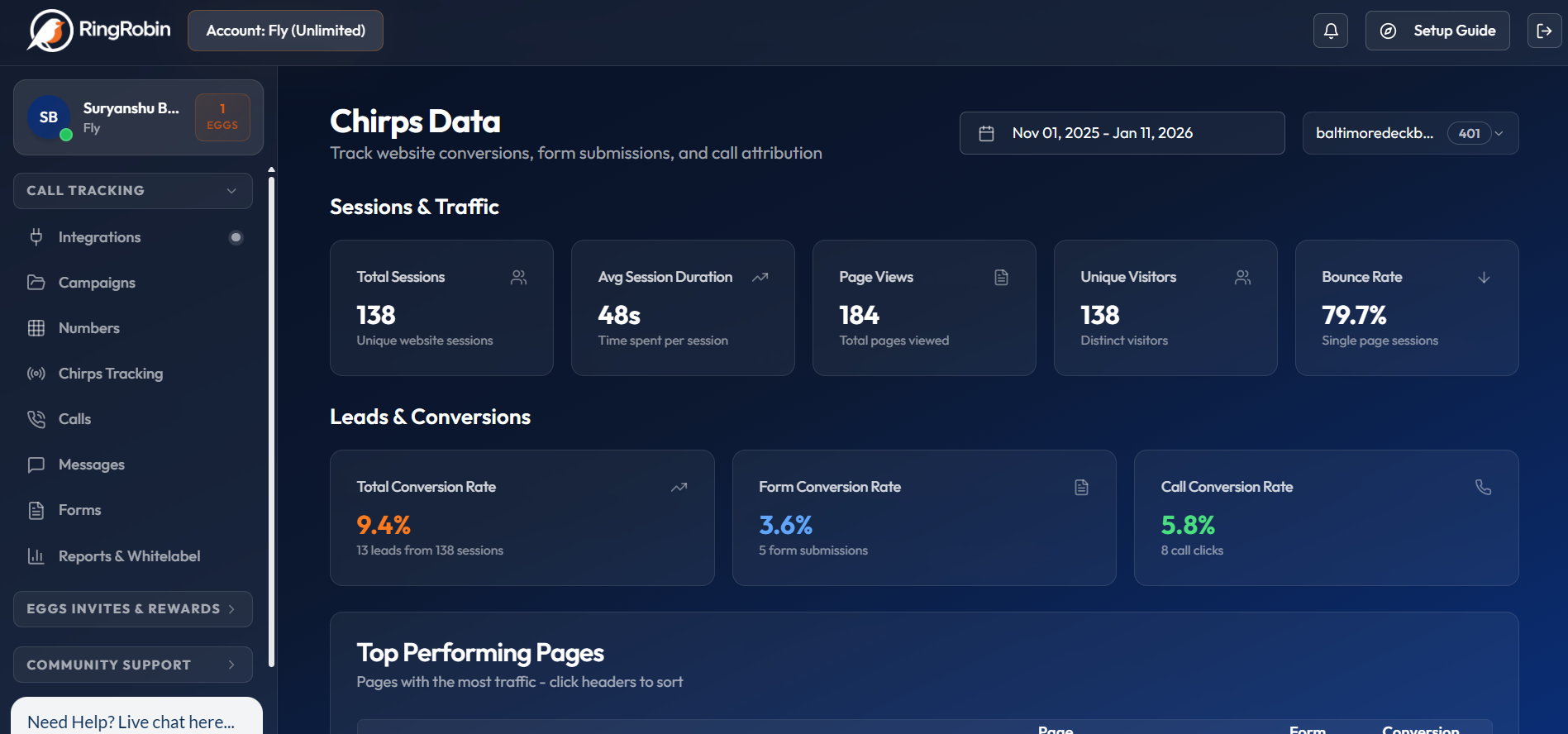
Chirps is the tracking layer inside RingRobin that records the full story behind every lead.
It captures traffic and session activity, marketing attribution, and conversion triggers, then ties that information directly to calls and form submissions.
That includes the source, the path through the site, and whether the visitor used a click-to-call button or converted after browsing multiple pages.
On the form side, Chirps tracks submissions alongside key CRO signals like completion and abandonment, so form optimization becomes measurable instead of guess-based.
All of this happens by adding a tiny bit of code to your website’s header, and RingRobin assembled the data in a way that makes it easy to read, leading to a better decision-making process.
Why “One System” Makes CRO Easier
Most tool stacks force you to piece together call logs, form plugin notifications, and analytics reports, and then hope they line up.
RingRobin replaces that with a single source of truth, where calls, forms, attribution, and visitor behavior live in one place.
That means faster decisions, clearer testing, and simpler reporting, because every lead can be traced back to what caused it.
When the data is connected, the next CRO move becomes obvious, and scaling what works becomes repeatable.
It transforms how you handle a rank & rent portfolio as well as any client websites you manage. And the reporting features make RingRobin the perfect fulfillment tool.
Start Using RingRobin For Call And Form Attribution
Call source attribution is what turns lead gen into a repeatable system instead of a guessing game.
It shows where calls and form submissions really come from, what visitors did before converting, and what actually triggered the lead.
That clarity makes CRO easier, makes scaling safer, and makes reporting effortless, because results can be proven instead of debated.
If you’re serious about increasing conversions without stitching together call tracking, form plugins, and analytics, RingRobin gives you the full picture in one place with Chirps.
Create your free RingRobin account and start attributing every call and form lead from your next visitor.