
Getting link timing right is one of the biggest multipliers in rank & rent SEO.
When you build backlinks at the right moment, you can turn a page that’s hovering into a page that breaks through, starts generating calls, and becomes a rentable asset.
The tricky part is that “right moment” isn’t based on a calendar date; it’s based on signals in your rankings, indexing, and early SERP behavior.
In this guide, I’ll show you the key checkpoints to hit before you spend a cent on links, the three best times to start building, and how to tell the difference between normal volatility and a real problem.
I’ll also share a free tool that overlays your link dates on ranking graphs so you can see what’s working without guessing.
Why Rank & Rent Link Timing Is Different
Backlink timing for rank & rent is simpler, faster, and less “sandboxy” than most people expect.
That’s because you’re playing a local SEO game, not an affiliate or blog game where Google often needs months of trust-building before anything sticks.
In national content niches, aggressive link velocity can raise red flags, and you’ll sometimes see long “sandbox” phases where the site’s rankings don’t move at all, even when you do everything right.
Local lead gen SERPs don’t behave the same way.
Competition is often thinner, results are frequently directories or under-optimized local sites, and Google is mainly trying to rank the best intent match for a service in a location.
That changes the risk profile, because you can usually push harder and earlier without triggering the same volatility you’d see in affiliate spaces.
You’ll often see ranking movement sooner in local SERPs.
I’ve built Agent X sites that jumped to the top of page one within days, and it rarely takes more than a few weeks to see sites level out between page 1 and 3.
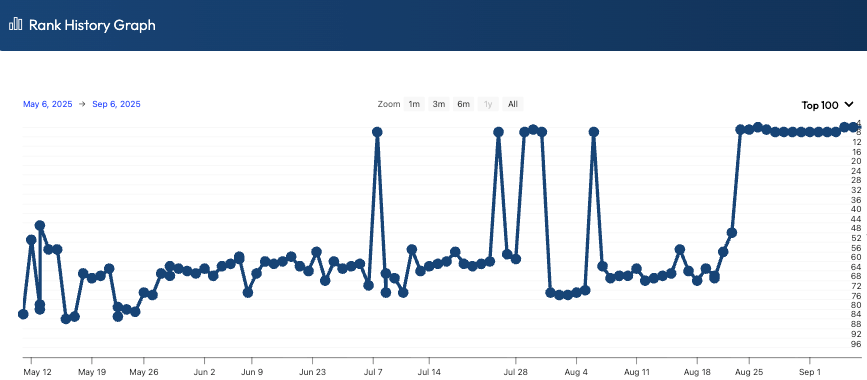
Anyone who has done affiliate SEO or tried to rank blog sites knows that results like that simply don’t exist, especially not on brand-new sites.
You’ll often see ranking movement in response to inks sooner in local SERPs, which means you can judge link impact by watching whether a page breaks out of the “stuck zone” (typically positions 8–25) and starts holding top-of-page placements.
That’s the objective: use links as a controlled push to get a converting page into the top spots where calls happen, then slow down and shift your effort to scaling the next site or location.
The Pre-Link Checklist
Before you build a single backlink, make sure the site is actually link-ready, because links only amplify what’s already there.
Start with the foundation by making sure your core pages are live and complete, including the homepage, main service page, location or service-area page, and contact page.
Each of those pages should have clear calls-to-action, a visible phone number, and enough content to show Google exactly what the site is about.
You also want call tracking and form tracking in place from day one, because there’s no point pushing rankings if you can’t measure what the traffic does.
Next, check that Google can crawl and index the site properly, especially the page you actually want to rank.
That page should be indexed, remain indexed, and ideally start showing impressions in Search Console before you spend money on links.
You should also rule out basic issues like noindex tags, bad canonicals, redirect problems, thin duplicate pages, or weak internal linking.
Internal linking is more important than most people believe, and I often see people make the mistake of believing that their navigation bar is enough to provide internal links.
Always make sure you contextually interlink your pages, that means from the home page to every service page, between service pages, and then from each service page back to the home page.
That way, link juice coming into any page will distribute around the site as a whole.
Here’s a checklist to tick off:
- Core pages are live and complete
- CTAs, phone numbers, and forms are in place
- Call tracking and form tracking are active
- Target pages are indexed and showing impressions
- No technical blockers are holding the site back
- Internal links clearly support the main money page
The Three Best Times To Start Building Backlinks
Many people approach link building for client and lead gen SEO extremely cautiously and conservatively.
For client SEO, you certainly want to avoid taking a site, but the great thing about Rank & Rent sites is that you can pump them out fast.
And in my experience, you can approach things very differently.
Scenario A: Early Boost
The first good time to start building backlinks is when the site is indexed, the core pages are live, and you want to accelerate those early rankings.
This is where rank & rent has an advantage over other SEO models, because you can often be more aggressive without tripping the same filters you’d worry about in affiliate or blog niches.
If the SERP is weak and your on-page SEO is solid, an early link push can help Google take the site more seriously, much faster.
That doesn’t mean acting blindly.
It means the site is already link-ready, the target page is indexed, and you’re using links to speed up a process that’s already pointed in the right direction.
For local lead gen, this can be the difference between waiting around for months and getting a site into competitive positions while the niche is still wide open.
Scenario B: Breakout Push
The second-best time to build links is when your main keywords get stuck on page two or page three.
This is one of the most common patterns in rank & rent, because the page is clearly relevant enough to rank, but not yet strong enough to break into the positions that generate calls.
At this stage, backlinks act like a controlled push.
You’re not trying to rescue a bad page.
You’re trying to help a decent page cross the line from “visible” to “valuable.”
This is usually where a few targeted links to the money page or its close supporting pages can make a very noticeable difference.
If the page has decent on-page SEO, matches intent, and has already shown it can hover in the 11–30 range, links are often the thing that gets it moving.
Scenario C: Scaling Winners
The third best time to build backlinks is when the site already has page-one traction, and you want to expand beyond the original target keywords.
Once a rank & rent site starts proving itself, that’s the moment to branch out into LSI terms, service variations, and longtail local keywords that can bring in extra calls.
Instead of putting all the pressure on one page, you start using backlinks to support topical depth across the site.
That might mean building out extra service pages, neighborhood pages, FAQ content, or supporting articles that strengthen the overall cluster.
At this stage, links are no longer just about getting ranked.
They’re about increasing keyword spread, protecting page-one positions, and turning one successful site into a broader lead machine.
This is how a single winner starts turning into a stronger local asset with multiple ways to generate enquiries.
How To Tell If Your Site Is Ready
If you’ve gone through the checklist above, your site is ready for links, and you don’t need to stand around waiting for Google to send you a handwritten invitation.
Rank & rent sites can usually handle links much earlier than people think, especially when the niche is local, the SERP is weak, and the site is properly built.
So don’t be afraid to start early if the foundations are in place.
In fact, with the right keyword research, a smart EMD choice, and a properly optimized site, you often won’t need many links at all.
That’s the beauty of this model.
You’re not trying to brute-force a terrible opportunity; you’re giving a well-positioned site the small push it needs to start producing calls.
Measuring Link Impact The Right Way
Measuring link impact the right way starts with one simple idea: you need to see backlinks and rankings on the same timeline.
If you only look at a ranking graph by itself, every jump, dip, and wobble becomes a guessing game.
Was it your new link, a Google shuffle, a competitor move, or just normal volatility?
That’s why visualizing link events directly against ranking movement is so useful.
When you can see the date a backlink was built, the date it indexed, and what rankings did afterward, you stop making “maybe” decisions and start spotting real cause-and-effect patterns.
That’s exactly what LinkSheets is built for.
It graphically shows the crossover between your target keywords’ ranking history and your backlinks’ build and indexation dates, so you can quickly tell whether links are helping, doing nothing, or lining up with negative movement.
It also tracks backlink indexation automatically and includes a Link Power score, which makes it easier to judge not just when links go live, but how much weight they may actually carry.
In other words, it turns link building from “I think this worked” into something you can actually see.
Start Tracking Your Backlinks With LinkSheets
For rank & rent sites, backlink timing is less about waiting for a “safe” date and more about recognizing when a site is indexed, optimized, and ready to move.
If the foundations are solid, links can be used early to accelerate rankings, later to push stuck keywords, and again to scale winners into broader lead assets.
The smartest approach is to stop guessing and start measuring, because when you can see link dates and ranking movement together, you know exactly what’s helping and what isn’t.
Register for a free LinkSheets account today and start tracking link effects in a completely new way.
It’s an all-in-one solution that reduces all the manual work for tracking links and rankings, meaning you spend more time ranking your sites rather than monitoring what’s happening.